Thursday, June 19, 2014

INVASION OF THE TEMPLE OF LORD JAGANNATH AT PURI

Invasions of the Temple of Lord Jagannath at Puri
BY: SUN STAFF 
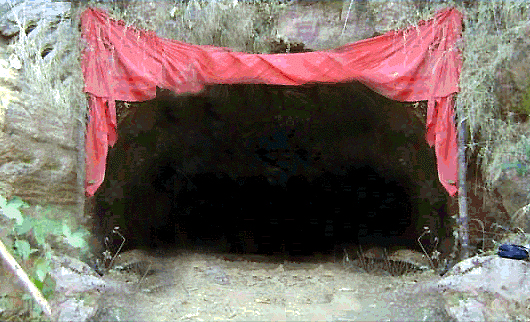
The impenetrable caves at the foot of the Trikut Hills at Sonepur-Gopali,
where Their Lordships hid during the Raktavahu invasion

Oct 06, 2011 — CANADA (SUN) — Adaptation of an article by Abhimanyu Dash, in two parts.
Throughout the ages, the temple of Lord Jagannath at Puri has been invaded and plundered eighteen times, as recorded in the annals of history. The temple was a lucrative place of wealth for invaders to plunder. To non-Hindu invaders, the temple was a good place to display Zihad (religious war). To loot its property and profane idols were motives behind every invasion.
Owing to a series of inroads on the temple of Lord Jagannath, the Triad were exiled in various regions of Orissa. The invasion of Raktavahu on the temple of Lord Jagannath is considered to be the first one, as per the record of the Madalapanji, the temple chronicle. Andrew Stirling reproduced the description of Raktavahu's invasion from the Madalapanji in his writings in 1822. The story of Raktavahu's invasion recorded in the Madalapanji indicates that he had defeated King Subhanadeva of Orissa.
During this invasion the Deities were taken away to Gopali, a village in Sonepur, and kept underground. Prof. K.C. Panigrahi has identified Raktavahu with Govinda-III, the Rastrakuta King of Deccan, and Subhanadeva with Subhakaradeva-I of Bhaumakara dynasty. As evidence, Prof. Panigrahi has taken the help of the Hindol plate of Subhakaradeva-III of 839 AD, and Sanjan plates of Amoghavarsha. It is stated in the Sanjan plates of Amoghavarsha that the Rastrakuta king Govinda-III (AD 798-814) conquered Kosala, Kalinga, Vanga, Dahala and Odraka. Under Govinda-III the Rastrakutas became invincible everywhere and there is therefore no doubt that they invaded Odraka (Orissa).
Based on the Hindol plate of Subhakaradeva-III, Prof. Panigrahi states that the Rastrakuta King's invasion of Orissa took place during the reign of Subhakaradeva-I. Govinda-III, alias Raktavahu, approached Puri with his army from the sea. The King of Orissa fled from the city with the Deities of Lord Jagannath and His Associates lodged in a cart. Their Lordships reached the Western frontier of Sonepur and were buried at a place known as Gopali. After 146 years Yayati-I, the Somavamsi king, got the Deities dug out, made new Deities, built a new temple at Puri, and enshrined them there. Gopali, a village with a shrine of Jagannath, still exists at a distance of 16 miles from Sonepur. [1]
Yayati-I, after bringing back the Triad, performed navakalebara of the Deities at Puri because of the degraded conditions, with the help of servitors. The citadel of the Lords was fixed in the temple, measuring 38 Hatas (cubits; at present the temple of Lord Nrusingh) beside the Mukti Mandap in the precinct of Sri Jagannath Temple. That is why king Yayati is regarded as the ‘Second Indradyumna' in the annals of history, owing to this restoration. [2]

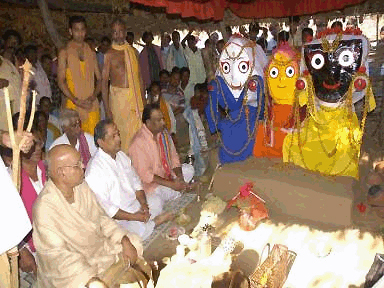
Lord Jagannath Deities today at Gopali, Sonepur

During the period of invasion of Raktabahu, the Deities were worshipped at Gopali in Sonepur. At present the place is at Chhalia mountain in Kotsamali. The Deities returned to Shrikshetra during 814 A.D. and 819 A.D. [3]
The second invasion on the temple of Lord Jagannath was waged by Illias Shah, the Sultan of Bengal in 1340 A.D. during the reign of Narasinghadeva-III. His defence system in the northern frontier of his empire was very weak. The military organization of the Fort of Raibania in north Balasore was not strong. The commandants of the fort were bribed by Illias Shah.
Narasinghadeva III felt insecure and kept his queens in the Giridurga near Simachalam. He prepared militarily to defend his empire of Utkal. In spite of his military arrangement to safeguard his empire, Illias Shah suddenly attacked the temple of Jagannath in 1340 A.D. He made havoc among the religious minded people of Puri. The people ran in panic to save their lives. The soldiers of lllias Shah killed the people mercilessly and looted the wealth of the temple. Narasinghadeva III was unable to protect his people and the temple, although he successfully hid the triad Deities in an unknown place, and no harm was done to Them.
During the reign of the Ganga King Bhanudeva III, the third invasion took place in 1360 A.D. by Feroz Shah Tughluq, the Muslim ruler of Delhi. At the time of invasion Bhanudeva III was not in his capital. When he got the news of invasion, he returned to Puri with his army and found no Feroz Shah Tughluq. Feroz went back Delhi via Jajnagar (Jajpur). Nothing is known about his desecration of the Triad and plunder of the temple. But scholars believe that he had thrown the Deities into the Mahodadhi (Bay of Bengal). This view is not supported by historical evidence.
The fourth invasion was launched by Ismail Ghazi, the commander of Allauddin Hussain Shah, the Sultan of Bengal in the year 1509 A.D. The Suryavamsi King Prataprudradeva was the ruler of Orissa, and he was in the South at the time of invasion. The priests of the temple sailed the Triad to the forthills of the Chadheiguha Pahada in the Chilika Lake. On being informed, King Prataprudradeva rushed back from Deccan and drove away Ismail to the point at Huguli in the Bengal. [4]
The fifth invasion was launched by Muslim invader Kalapahara in the year 1568 A.D., during the reign of Mukundadeva Harichandan, the Chalukya King of Orissa. Kalapahara was one of the army assistants of Sulaiman Karrani, the Afghan Sultan of Bengal. In this expedition Bayazid, the son of Karrani was the commander of the Bengal army. He was assisted by Sikandar Uzbeg and Kalapahara. The reasons for Karrani's attack on the temple of Lord Jagannath was Mukundadeva's entanglement in the political diplomacy which created much bad blood between the two. Firstly, Mukundadeva gave political shelter to Ibrahim Sur, who was a great enemy of Sulaiman Karrani. Secondly, Mukundadeva committed another offence by exchanging envoys with the great Mughal emperor Akbar. In 1566 A.D., Akbar sent envoys to the court of Mukundadeva and Mukundadeva in exchange sent a Hindu ambassador named Paramananda Ray to the Court of the Mughal emperor. [5] Akbar was a great enemy of Sulaiman Karrani. These two offences committed by Mukundadeva incurred great displeasure in the mind of Sulaiman Karrani, which paved the way for his Orissan invasion.
Kalapahara, the Assistant Army General of Sulaiman Karrani led the expedition against Mukundadeva of Orissa in 1568 A.D. On the contrary, Mukundadeva sent Raghubhanja Chhotaraya to resist the army of Kalapahara,but failed. Raghubhanja proved a traitor, and Kalapahara occupied Cuttack. So Mukundadeva surrendered before the Muslim army of Bengal. In the meantime, Ramachandra Bhanja, the commandant of Sarangagarh Fort (Baranga) rebelled against Mukundadeva. The latter was killed at Gohiratikara (near Jajpur) because of the two traitors Sikhi and Manai, who were the generals of the King of Orissa. Ramachandra Bhanja was also killed by the invader.
Ramachandra Bhanja, who declared himself the King of Orissa, finally proved himself as a traitor behind the assassination of Mukundadeva, the last Hindu king of Orissa. In the Madalapanji, this traitor has sometimes been described as Ramachandra Bhanja and sometimes as Ramachandradeva. The latter name seems to be more correct. [6]
After occupation of the forts of Cuttack and Sarangagarh, Kalapahara successfully led his army to Puri to demolish the temple of Jagannath. The servitors of the temple got information of the fall of Katak (Cuttack) to the hands of the Muslims. They hid the triad, Lord Jagannath, Baladev and Subhadra in an island inside the Chilika Lake, as stated in theMadalapanji. The Deities were hidden underground at Hastipatna in Parikuda, identified with Chhapali, Khepali and Hatipada. Kalapahara could easily know about the secrecy of the hidden Deities. He carried the triad from Chilika Lake to the bank of the river Ganges on an elephant, where he burnt them. Bisher Mohanty, a Vaishnavite saint, followed Kalapahara and managed to bring back the ‘Brahmas' to Kujanga Gada, keeping Them inside a mridanga. Later on the ‘Brahmas' were brought to the Gopal Temple of Khurda Gada in 1575 A.D. by King Ramachandradeva. Subsequently the ‘Brahmas' were placed in the Deities. The Deities were brought back to the temple of Jagannath from Khurdagada.
It is stated in the same chronicle that Kalapahara destroyed the great temple of Jagannath up to the Amalakasila, and defaced the Deities. It is difficult to ascertain the truth of the statement, but to us it seems that the temple was not pulled down or razed to the ground, though the Deities were damaged and disfigured as much as possible. There is no archaeological evidence to show that the temple was rebuilt at any time. The original temple as built by Chodaganga has come down to us, though the carvings on the outer faces of the temple have been damaged or disfigured. [7]
A tradition in Bengal avers that Kalapahara was earlier a Brahmin by caste. His name was Raju, alias Kalachand. He fell in love with Dulari, the daughter of the Sultan of Bengal and married her, but he wanted to retain his religion. The Hindu society refused to accept him. He came to the temple of Jagannath at Puri for expiation, but the priests rebuffed him. This made him reactionary and revengeful. He took a vow to exterminate Hindu religion, deities and temples. This theory is only traditional, and does not have any historical authenticity. Kalapahara was an Afghan; Kalapahara was a title used by many Afghans. A nephew of Bahalul Lodi bore this name. Prof. P. Mukherjee observes that "The Muslim chronicles conclusively prove that Kalapahara was a full blooded Afghan and not a Brahmin renegade."[8]
Sulaiman Karrani died in 1572 A.D. followed by several invasions and plunders on the temple of Lord Jagannath at Puri by his successive rulers, namely Bayazid, Daud, Kuya Khan and Kutlu Khan Lohani, who ruled over Orissa one after another.
After them the sixth invasion was jointly waged on the temple of Jagannath in 1592 A.D. by Suleman, the son of Kuthu Khan and Osman, the son of Isha (ruler of Orissa). They havocked people at Puri and killed them mercilessly. They desecrated the images of the great temple and plundered its wealth. By such action, the invaders violated the treaty earlier signed between Isha and Raja Mansingh in 1590 A.D. Mansingh the Mughal general finally suppressed the militant activities of these two Muslim invaders in 1592 A.D.
During this time Ramachandradeva, the Bhoi dynasty ruler of Khurda, took the leadership of feudatory rulers of Orissa, who joined their hands against the Mughal rule. During the reign of Purushottamadeva of Bhoi dynasty, Mirza Khurum, the commander of Islam Khan, the Nawab of Bengal invaded Puri in 1601 A.D., which is considered to be the 7th attack on the temple of Lord Jagannath. The servitors of the temple could smell of it and shifted the triad Deities to village Kapileswarpur near Puri in vessels, on the River Bhargavee. The Deities were kept in the Panchamukhi Gosani Temple at Kapileswarpur. Dola festival was celebrated in that temple. Thereafter the Deities were shifted to Dobandha — Pentha where Their Lordships passed eight months with shital bhoga offerings. As per the description of theMadalapanji, Mirza Khurum invaded Puri temple during the time of Dola Yatra. He found no Deities in the temple and so looted the underground treasury.
Hasim Khan, the Subedar of Orissa waged the eighth invasion on the great temple of Lord Jagannath at Puri. This time Purushottam Deva was also the King of Khurda. He shifted the deities to the Gopal temple at Khurda before Hasim's arrival at Puri. In order to satiate his master Jahangir, the then Mughal emperor, Hasim Khan plundered the temple of Jagannath at Puri. The Deities were returned to the temple at Puri Dham by the King in 1608 A.D.
The ninth invasion on the temple of Jagannath was launched by a Hindu Rajput, Jagirdar Kesodasmaru in 1610 A.D. Kesodasmaru was serving under Hasim Khan. He was a friend of Jahangir. He came to Puri in disguise of a pilgrim accompanied by his faithful soldiers, without military uniform during the celebration of the car festival. They entered into the Jagannath Temple and occupied it, converting the temple into a fort. At that time the Triad were in the Gundicha Temple. Kesodasmaru plundered crores of treasury of the Temple of Jagannath.
Unfortunately, the king of Khurda Purusottamdeva was absent at Puri as chherapahanra(sweeping the chariots) was performed by Mudirath on behalf of the king. The king immediately rushed to Puri with his Paik soldiers, chariots, cavalry forces, elephant forces, arms and ammunitions to punish Kesodasmaru. The Paik soldiers jumped into the premises of the temple with the help of chariots, through the four gates. They fought against the Rajput soldiers who were looting the wealth of the temple. Kesodasmaru ordered his soldiers to counter attack the Paik army. The Rajput soldiers decided to bind up clothes tightly with bamboos and used oils to ignite the clothes, which turned into fireballs, and threw them against the chariots to burn. The chariots very quickly caught fire and burnt to ashes. So many Paiks died.
The King was unable to face the invaders, who looted the wealth of the temple, then went away. During the course of attack, the Deities remained in the Gundicha Temple for eight months. They were brought back to the Temple of Jagannath by the help of Vimana.

FOOTNOTES:

1. K.C. Panigrahi, "The Bhaumakaras", in History of Orissa, Cuttack 1995, pp. 78-79
2. Rabindranath Pratihari, "Exile", in Cultural Heritage of Odisha, Puri Dist.(ed) G.Mohanty (et al), Vol. XII, part-III, Bhubaneswar, 2010, P-188
3. Ibid, p. 199
4. Ibid, p. 189
5. K.C. Panigrahi, "The Chalukyas", History of Orissa, Cuttack, 1995, p. 242
6. Ibid, p. 243
7. lbid, p. 244
8. Ibid, p. 245
Source: 'Orissa Review' 

Friday, June 6, 2014

THE HISTORY OF SRI TIRUPATI BALAJI VENKATESWARA from Puranas

The History of Sri Tirupati Balaji Venkateswara from the Puranas


The Rishis headed by Kasyapa began to perform a sacrifice (yaga) on the banks of the Ganges. Sage Narada visited them at that time and asked them to tell him why they were performing the sacrifice and who would be pleased by it. Not being able to answer the question the Rishis approached Sage Bhrigu.To reach a solution after a direct ascertainment of reality, Sage Bhrigu first went to Satyaloka (the abode of Lord Brahma). There, he found Brahma reciting the four Vedas with his four heads in praise of Lord Narayana and attended upon by Sarasvati and not taking notice of Bhrigu offering obeisance. Concluding that Brahma was unfit for worship, Bhrigu left Brahmaloka for Kailasa.

At Kailasa, Bhrigu found Lord Siva spending his time pleasantly with Parvati and not noticing the Sage Bhrigu. Parvati drew the attention of Siva to the presence of the sage.

Lord Siva became furious at the intrusion of Bhrigu and tried to destroy him. The sage cursed and left for Vaikuntham.

The angry sage went to Shri Vaikuntham. Shrimannarayana was reposing at that time on Adisesha with Shri Mahalakshmi at His feet in service. Finding that Shrimannarayana also did not notice him, the sage was infuriated and he kicked the Lord on His chest, the place where Mahalakshmi resides.

At once the Lord hastened to make apologies to the angry Sage and pressed his feet to allay the pain caused to the leg. In doing so the Lord removed the eye in the foot of the Sage, which gave him power as to defy the Devas. The Sage thereupon decided that Shri MahaVishnu was the most Supreme of the Trimurtis and told the Rishis the same.They thereupon decided that Shri MahaVishnu was the fruit of the Yaga and sacrifice was offered to Him (Vishnu).

At the commencement of the present Sveta Varaha Kalpa, the whole Universe was filled with water and the earth was immersed in it. Lord Vishnu took to form of a White Boar and dived into the water to lift the earth. He slew the demon Hiranyaksha who caused obstruction to him and rescued the earth.

Brahma and the other Devas extolled Shri Varaha at the time with the chanting of the Vedas and showered flowers on him for saving the Earth. Lord Vishnu decided to stay on Earth in the form of the White Boar for some time, to punish the wicked and protect the virtuous. This place thenceforward came to be known as Varaha Kshetra and Varaha Kalpa began from that time.

After the departure of Mahalakshmi, Lord Vishnu left Vaikuntha in a forlorn condition and took his abode in an ant-hill on the Venkata Hill under a tamarind tree beside a Pushkarini.

Brahma and Mahesvara, taking pity on the condition of Vishnu, made up their mind to assume the forms of a cow and its calf to serve him.

The Sun God informed Mahalakshmi of this and requested her to sell the cow and calf to the king of the Chola country assuming the form of a cowherdess.

The king of the Chola country bought the cow and its calf and sent them to graze on the Venkata Hill along with his herd of cattle. Discovering Lord Vishnu in the ant-hill, the cow everyday emptied her under over the ant-hill and thus fed the LORD.

Finding that the cow did not yield any milk, the Chola Queen chastised the cowherd severely.

To find out the cause of the absence of milk, the cowherd followed the cow and hid himself in a bush and discovered the cow emptying her under over the ant-hill.

Getting wild over the conduct of the cow, the cowherd aimed a blow with his axe on the head of the cow. But the God rose from the ant-hill to receive the blow and save the cow.

When the cowherd saw the Lord bleed at the blow of his axe he fell down and died.

On the death of the cowherd, the cow returned bellowing to the presence of the Chola King with blood stains over her body. To find out the cause of the terror of the cow the Chola King followed her to the scene of the incident.

Near an ant-hill, the King found the cowherd lying dead on the ground. While he stood wondering how it had happened, the Lord rose from the ant-hill and cursed the king to become an Asure from the fault of his servant. Entreated by the king who pleaded innocence, the Lord blessed him by saying that His curse would end when He was adorned with the Kireetam presented by Akasa Raja at the time of His marriage with Shri Padmavati.

Thereafter Shrinivasa decided to stay in this Varaha Kshetra. He therefore requested Shri Varahaswami to grant Him a site for His stay. His request being readily granted, Shrinivasa ordained that a pilgrimage to His shrine would not be complete unless it is preceded by a bath in the Pushkarini and Darsan of Shri VarahaSwami, and that Puja and Naivedyam should be offered to Shri Varaha first.

Yasoda brought up Shri Krishna, the son of Devaki, in his early years. Yasoda was not blessed to witness the marriage of Shri Krishna with Rukmini and she felt very sad. Shri Krishna promised to fulfil her desire in her next birth as Vakuladevi in his next Avatara as Shrinivasa. This Vakuladevi was sent to serve Shrinivasa by Lord Varahasvami, on whom she was attending till Shrinivasa came to Venkatachala.

Sometime after, a King named Akasa Raja who belonged to the Lunar race was ruling over Thondamandalam. He had a brother named Thondaman. Akasa Raja had no issue for a long time and so he wanted to perform a sacrifice for obtaining an offspring. While he was himself ploughing and ground for sacrifice, his plough turned up a lotus in the ground. On examining the lotus, the King found a female child in it.

The king was happy to find a child even before he performed a sacrifice and carried it to his place and gave it to his Queen to tend it. At that time he heard an aerial voice which said "O King, tend it as your child and fortune will befall you". As she was found in a lotus, the king named her Padmavati.

In course of time Princess Padmavati grew up into a beautiful maiden and was attended by a host of maids. One day while she was spending her time in a garden picking flowers with her maids, Saint Narada approached her. Assuring her that he was her well-wisher, he asked her to show him her palm to read her future. He foretold that she was destined to be the spouse of Lord Vishnu himself.

At this time Lord Shrinivasa, who went for hunting chased a wild elephant in the forests surrounding the hills. In the pursuit, Shrinivasa was led into a garden, where Princess Padmavati and her maids were picking flowers.The sight of the elephant frightened them and their Princess.

But the Elephant immediately turned round and saluted the Lord and disappeared in the forest.Lord Shrinivasa came on horse back and saw the frightened maidens and he was accosted by them with queries.

Lord Shrinivasa had explained them about his birth and parentage. He enquired them about their princess and her parentage and birth.

When he was informed that the Princess was Padmavati (lotus-Born) the foster Daughter of Akasaraja, he loved her and made advances to the Princess. He was repulsed with stones by the maids and he urgently returned to the hills leaving the horse, which fell on the ground.

Vakuladevi, as usual, brought dinner to Shrinivasa comprising various delicious dishes. But she found him lying on his bed love-sick. She enquired the cause of his sickness. The Lord informed her that unless he secured Princess Padmavati, he would not be well. Vakuladevi then asked him to tell her all about the Princess, who she was, and how he came to love her. The Lord then narrated the story of her (Padmavati’s) previous birth and his promise to wed her.

In olden times Lakshmi was staying as Vedavati in a Rishi Asrama in the forests. At that time Ravana, the lord of Lanka came there and tried to tempt her. Vedavati grew angry and cursed him that she would bring about his death.

To fulfil her words, Vedavati entered into the fire but the fire-god rescued her. He took Vedavati to his house and entrusted her to his wife to take care of her.

When Ravana was about to carry away Sita from Panchavati in the absence of Rama and Lakshmana, the Fire-God appeared on the scene and offered Vedavati to Ravana as the real Sita who was kept with him by Rama to evade Ravana.

Ravana took Vedavati to Lanka thinking she was the real Sita, while Agni(Fire-God) took Sita to his house and asked his wife Swahadevi to look after her.

After the destruction of Ravana, Vedavati entered the fires when rejected by Rama. Then the Fire-God offered the real Sita to Rama. Rama then questioned her as to who the other lady by her side was.

Sita informed Rama that she was Vedavati who suffered all the tortures for her sake for ten months in Lanka and requested Rama to accept her also as his spouse. But Rama declined her request saying that he was wedded to policy of having only one wife during his life time, and he promised to wed her in her next birth as Padmavati, born as the daughter of Akasaraja when he will take the form of Shrinivasa.

There upon Vakuladevi thought that Shrinivasa would not be happy unless he married Padmavati and she offered to go to Akasaraja and his queen and arrange for the marriage. On the way she met the maid-servants of Padmavati returning from a Siva Temple. She learnt from them about Padmavathi's love-sickness and went to the queen along with them.

Akasaraja and his queen Dharanidevi became anxious about the health of their daughter. They learnt about Padmavati's love for Shrinivasa of Venkata Hill. Akasaraja consulted Brihaspati about the propriety of the marriage and was informed that the marriage was in the best interests.

After the departure of Vakuladevi Shrinivasa could not rest in peace. He doubted her success in the mission. He therefore assumed the form of a Yerukula-woman and entered the streets of the capital telling fortunes. Padmavati's maids saw her and invited her to the presence of their queen.

The maid-servants went and informed the queen that the fortune-teller was hesitating to come into the palace without an invitation from the queen.

The queen came out herself and invited the fortune-teller into the palace.The fortune-teller was taken to the presence of Princess Padmavati.

The fortune-teller saw the palm of the Princess and told the queen about the cause of Padmavati's indisposition and advised to give her in marriage to Lord Shrinivasa. She also told the queen that a lady would approach her shortly to formally request Padmavati's hand in marriage on behalf of Shrinivasa.

After the departure of the fortune-teller, Vakuladevi went to the queen along with the maids and informed her that she came from Shrinivasa to request the hand of Padmavati in marriage for him.

Having consulted Brihaspati and heard from his queen about the prediction of the fortune-teller and arrival of the messenger, from Shrinivasa, Akasaraja decided to bestow his daughter on Shrinivasa and he called the palace purohits to fix a Muhurtam for the marriage.

Akasaraja informed his Ministers and other Officials of his intention. Immediately a letter was drafted for being sent to Shrinivasa requesting him to come and marry the Princess.

Akasaraja entrusted the letter to Sukamahamunin for being delivered to Shrinivasa. Suka went to Venkata Hill with Vakulamalikadevi. He presented the Patrika to Lord Shrinivasa, who felt pleased and sent his garland through him for Padmavati.

Immediately Lord Shrinivasa called for a conference of the Gods to win their consent for His marriage with Princess Padmavati.

To meet the expenses of the marriage, Kubera lent money to the Lord.

Lord Shrinivasa started for the residence of Akasaraja with his consorts and Brahma and Siva and his vehicle Garutman.

At the entrance the Lord was received by Akasaraja with all honours and was taken in procession on a mounted elephant to the palace for the marriage.

In the presence of all the Devas, Lord Shrinivasa took the hand of the Princess Padmavati and wedded her and thus blessed Akasaraja.

Contest between Adisesha and Vayudeva

During the Dwaparayuga, Vayudeva (the Wind God) went to Vaikuntam to pay his obeisance to Lord Shri Vishnu. The Lord was reclining in the company of Shri Lakshmi. The doorway was guarded by Adisesha. Vayudeva was incensed when Adisesha prevented him from entering Shri Vishnu’s mansion. Adisesha and Vayudeva began to fight with each other.

When Lord Vishnu intervened, each was boasting of his superior valour and supreme might. To test who was stronger, the Lord suggested that Adisesha encircle the Ananda hill, an off-shoot of the Meru mountain on its northern side, and that Vayudeva blow hard to try and dislodge the Ananda hill from Adisesha's hold. The contest waxed furiously, and as the World trembled, Brahma, Indra and the other Divine Beings requested Adisesha to yield victory to Vayudeva for the welfare of the world.

Obliging them, Adisesha released his hold on the hill. As a result, Adisesha and the Ananda hill were blown away to the banks of the river Swarnamukhi. Adisesha was dejected by his defeat. Lord Brahma and the others appealed to him by saying that he would be merged with the hill Venkatadri and Vishnu would reside on him. Adisesha then metamorphosed into the vast Seshadri, with his hood manifesting itself as Venkatadri sustaining Shri Venkateswara, his middle as Ahobila supporting Lord Narasimha, and his tail as Shrisailam bearing Lord Mallikarjuna (Lord Siva).

Restoration of the Earth by Adi Varaha

During the eight thousand yugas (the equivalent of a day and night for Brahma, the Creator), there was a raging fire, and everything on Earth was reduced to ashes. Man had to forsake the Earth and seek refuge in Janaloka.

At the approach of night (of Brahma), Vayu, the Wind God, blew furiously. Huge clouds were formed, there was torrential rain, and it resulted in Pralaya Kalpa (the Great Deluge). The Earth sank into the Patala loka, and remained in that state for a thousand years (during a part of that night of Brahma).

Shri Maha Vishnu, wanted to rescue the Earth. He assumed the form of Adi Varaha and proceeded to Pataloka. He fought a fierce duel with Hiranyaksa and killed him. He then slashed the water and brought up the Earth on his tusks.

Brahma, the Devas and the sages extolled Adi Varaha's virtues, by chanting the Vedic mantras. They prayed to Him to re-establish the Earth as before. Adi Varaha obliged them, and called upon Brahma to recreate the world. He expressed his desire to reside on the Earth to protect its people. He commanded his vehicle, Garuda to fetch Kridachala (an extensive natural hill with lofty peaks, embedded with gold and precious stones, and which resembled Adisesha in shape) from Vaikuntam.

Garuda brought Kridachala and deposited it on a sacred spot (to the East of Swami Pushkarini) chosen by Adi Varaha. Adi Varaha stood within the divine vimana of Kridachala, which shone with many gem-studded gopuras.

Brahma and the other holy personages requested the fearsome-looking Adi Varaha to assume a tranquil and composed look, and rest on the hill to protect men and grant boons to people unable to reach God through Dhyana Yoga (meditation) and Karma Yoga (doing one's own duty).

Adi Varaha appeared with four arms and a white face. He was adorned with jewels and accompanied by Bhu Devi. He resolved to stay at Venkatadri, under a divya vimana, to grant the prayers of men.

Source : http://www.indiadivine.org/news/temples-and-holy-places/the-history-of-sri-tirupati-balaji-venkateswara

&&&&&&&&&&&&&&&&&&&&&&&&&&&&&&&&&&&&&&&&&&&&&&&&&&

Monday, March 3, 2014

JAYADEV - DEVA SHARMA & LORD JAGANNATH

                        Jaya Deva


             By SWAMI SIVANANDA

"The sky is clouded and the wood resembles
The sky, thick-arched with black Tamala boughs;
O Radha! Radha! take this soul that trembles
In life's deep midnight, to Thy golden house!
So Narada spoke—and led by Radha's Spirit,
The feet of Krishna found the road aright;
Wherefore, in bliss which all high hearts inherit,
Together taste they, Love's Divine delight!"

These are the opening lines of a translation by Edwin Arnold of a piece of poetic composition in Sankskrit called Gita Govinda, the theme of which is the Divine Love between Radha and Krishna. The author is Jaya Deva, a great reputed Bhakta who lived about five hundred years ago, in a village called Bilvagam, near the sacred city of Jagannath-Puri in the state of Orissa. Gita Govinda is the most celebrated poetical work of Sri Jaya Deva.

His birth

Jaya Deva's father was Narayana Sastri, a very pious Brahmin. Jaya Deva's mother's name was Kamalabai. She was pious and devoted. Sastriar and his wife had no child for a long number of years. Sastriar had no desire for children. But Kamalabai nurtured a sacred desire for a son. She did not reveal this to her husband. She constantly prayed to the Lord that she might be blessed with a beautiful and virtuous male child. She was ashamed to be regarded by the world as a barren woman.

One night Narayana Sastri dreamt that the Lord appeared and told him that his wife's prayer would be fulfilled and that he would soon have an illustrious son. Sastriar woke up and reported to his wife his happy dream. He asked her if she made any prayer to God for the boon of a child. She admitted that she did pray. Narayana Sastri felt extremely grieved that all their Tapas and devotion became useless on account of their selfish motive. He became angry with his wife and said, "Foolish woman, you ought not to have prayed for a son. You ought to have prayed for the eternal bliss of Anna. You have ruined yourself and me also." He did not speak to his wife from that moment. She appealed to her husband for pardon, but to no purpose. They both even fasted for a day or two.

A holy pious Brahmin entered their house and enquired into the cause of their grief and reconciled them both. He said that it was the will of the Lord that they should be blessed with a virtuous son and that the child would become a great reputed saint.

Narayana Sastri thought that the Lord Himself had appeared in human form. A few months thereafter, a male child was born to Kamalabai. That was Jaya Deva.

Jaya Deva was highly devoted to God even in his boyhood. His Upanayana ceremony was performed when he was five years old. He studied all the sacred scriptures. He had an orthodox type of education.

Narayana Sastri entered the forest along with his wife to lead the life of a Vanaprasthi.

His marriage

There was one Brahmin in Jagannath-Puri by name Deva Sharma. He was a great Bhakta of Lord Jagannath; but, for many years, he had no child. One day he prayed to the Lord, "O Lord! If I beget children through Thy grace, I shall surely dedicate the first among them to Thee. This is my sincere heartfelt prayer. O dear Lord! Kindly grant this, my wish." So praying, he returned to his house.

Then, in due course of time, a daughter was born to the devout Brahmin Deva Sharma, and afterwards, many good and brilliant sons. Taking the daughter with him, one day he came to Lprd Jagannath with his wife by his side and said, "O Lord! By Thy grace, my desire has been fulfilled. According to my promise, I dedicate this first child to Thee. Kindly accept her."

Then he narrated all the previous story to the Pujakas or worshippers and went back to his house.

That night the Lord appeared in Deva Sharma's dream and told him, "O Deva Sharma! I am highly pleased with you. I have accepted your child. But, give your daughter to Sri Jaya Deva, because he is my dear devotee." The same dream the worshippers also had.

Jaya Deva was then living outside the village boundary in a leafy Kutia. He was meditating upon Lord Jagannath and his face showed clearly that he was extremely happy in spite of his material poverty. Sharma came there, and prostrating to Jaya Deva said, "By the command of Lord Jagannath I have brought my daughter Padmavati to you. Kindly accept her." Jaya Deva declined the offer, saying that he was very poor and that he was not a fit person to accept Kanya Dana. Despite all efforts, Jaya Deva did not accept the girl. Deva Sharma brought the worshippers of the temple to verify his statement.

Then, making the girl stand nearby, Deva Sharma said, "my dear daughter! From today he is your husband. You have to worship him daily. A woman merged in the service of her husband attains undying happiness." Thus saying, he returned to his house.

The girl stood for a long time near Jaya Deva. Jaya Deva said to the girl, "Your parents have gone away leaving you here. How are you going to live in this dreadful forest?" Padmavati replied, "O my lord! What are you saying? My father has given me to you. I belong to you now. I am not alone here, because you are always with me." Hearing these words of Padmavati, Jaya Deva thought, "She is speaking the truth. Surely it will be a sin to abandon her. Hence I shall have to go to her parents' house and marry her according to the ritualistic ceremonies." Thus resolving, Jaya Deva asked Padmavati to follow him to her parents' house for marriage according to Brahminical rites.

Padmavati said, "My father has ordered me to obey your commands implicitly. Therefore, this is a great blessing to me to act as per your wish." So saying she was ready by his side.

Thereupon Jaya Deva married Padmavati, daughter of Deva Sharma. He was liberal. He fed the poor and gave presents to Brahmins. He would never eat without at least one guest. The little money that Narayana Sastri had left was in a short time exhausted. Afterwards Jaya Deva begged rite in the orthodox Brahmin style. Despite the poverty, Jaya Deva and Padmavati lived very happily. Even though they were poor, they never ate without some guests. Their heart was filled with pure love and devotion. They were respected by all.

Gita Covinda

Jaya Deva wrote his grand immortal poem Gita Govinda which celebrates the glorious divine love of Radha and Krishna. All the people of the little village Bilvagam recited the Ashtakas. The Ashtakas were sung before Lord Jagannath during the annual festival. People were struck with the splendid music and poetry of Gita Govinda and praised it highly. The fame of Jaya Deva reached far and wide.

When Jaya Deva was composing the Gita Govinda and was in the middle of his composition, he could not find a suitable word. He kept the manuscripts in the room and went for a bath.

Lord Krishna Himself took up the form of Jaya Deva and asked Padmavati, "My dear, give me those manuscripts." Padmavati gave the Lord the manuscripts. She took the Lord for her husband. Lord Krishna wrote the couplet in His own handwriting. Again He went hurriedly for His bath in the river.

After a short while, Jaya Deva came to his house after his bath. He took up the manuscripts to jot down the poem which he had composed. To his great amazement, he found a couplet written there by somebody. He said to his wife, "O Padmavati!

JAYADEV
Who has written this poem? It is exceedingly beautiful. I could not write like this."

Padmavati said, "You yourself came suddenly, wrote the poem and at once returned for bath." Jaya Deva was struck with awe and wonder. Lord Jagannath appeared in his dream and said, "O Jaya Deva, I Myself wrote the couplet." Jaya Deva woke up and rejoiced heartily.

When the king of the country heard the glory and fame of Gita Govinda, he became jealous of Jaya Deva. As he himself was a poet, he wrote another Gita Govinda.

Once the king came to the temple of Jagannath. Jaya Deva was then dancing and singing his own Gita Govinda. The king said, "Why do you not sing my Gita Govinda?" Jaya Deva said, "The Lord is not so much pleased with your own work as He is with my Gita Govinda. Let us test this now."

The king ordered both his work and Jaya Deva's work to be placed before the Lord. The king prayed to the Lord, "Please keep that which is better and dearer to You on the top." All came outside and bolted the door. After a short time all went inside. The king opened the door first. He saw Jaya Deva's book kept over his own book.

The king was very much afflicted at heart. He gave up food and water. He had a dream. Lord Jagannath appeared in the dream and said, "Why do you grieve unnecessarily? There is no Kavya dearer to me than the Gita Govinda. I am pleased with your composition also. But, accept Jaya Deva's Gita Govinda as superior to your book. Propagate Jaya Deva's Gita Govinda all over the land." The king woke up and regained strength. He became a great devotee of Jaya Deva. He himself studied by heart Jaya Deva's Gita Govinda. He propagated the work of Jaya Deva throughout the land.

One woman was singing beautifully the Gita Govinda in the forests, when she was collecting fruits for sale. Lord Jagannath was very much pleased with her singing. He began to wander in the forest to hear her recitation. The Lord's garment was torn to pieces while He was running all over the forest, as it was caught in the thorny bushes of the forest.

In the early morning, the priest of the temple and the king saw the Pitambara of the Lord in rags. They were not able to find out the reason for the torn condition of the Pitambara. They prayed to the Lord to make them know the reason.
The Lord appeared in their dream and said, "One woman was singing Gita Govinda in the forest. I ran in the forest to hear her song. When I ran, the Pitambara was torn to pieces by the thorns."

The king and the priest praised both Jaya Deva and the woman who was selling fruits. The king brought the woman to his state and gave her immense wealth. She sang daily the Gita Govinda in the presence of the king.

The Lord becomes a slave of His devotees. He will do anything for the sake of His devotees.

Robbers cut Jaya Deva's hands and feet

Jaya Deva's father-in-law came to see his son-in-law and stayed with him for some days. He took Padmavati for a short stay with her mother.

A rich merchant named Bhagavan Das, native of a neighbouring village, came to Bilvagam and requested Jaya Deva to go to his house as a guest. Jaya Deva consented and accompanied the merchant. He stayed in the house of the merchant for some days. The merchant sent back Jaya Deva to Bilvagam in his own carriage loaded with many rich presents. There was a small forest between the two villages. A band of robbers came and attacked Jaya Deva. Jaya Deva gave them all the things. But the robbers suspected from the readiness with which Jaya Deva gave away all the things that he might report to the police and get them punished. Therefore they cut off his hands and feet and threw him into a waterless well.

Jaya Deva bore all the sufferings patiently. He prayed to the Lord that the robbers might be pardoned. He gave himself up to the care of God. He was fully conscious that God did everything for his good. He never made any complaint to God. He thought that a very great bad Karma had been purged out. He had perfect belief that what had happened was not an act of the robbers but the bidding of God Himself for his own good. This is the Bhav or the mental attitude of all real devotees. They always welcome suffering, trials and adversities.

The king of that province who had been out for hunting came to the very well where Jaya Deva was lying helpless, to see if there was water in it to quench his thirst. He did not find any water in the well, but he saw a mangled human body. At once he ordered his servants to lift up Jaya Deva. The servants carried out the orders of the king immediately. The king arranged to take Jaya Deva with him. In the course of his return to his capital, he asked Jaya Deva what his name was. As soon as the king came to know that the man was Jaya Deva of great reputation, he fell at his feet and requested him to accept him as his disciple. The king adored Jaya Deva as his Guru. Jaya Deva was carried in a palanquin. There was a grand procession in the town with music, etc. Jaya Deva was installed as the chief Guru of the stat*;.

The saintly nature of Jaya Deva, his piety, wide knowledge, spiritual attainments and his resignation to the will of God made a very deep impression in the mind of the king. One day the king approached the Guru and wanted to be initiated into the Sannyasin life.

Jaya Deva said, "O king! Sannyasa is not external renunciation. Real renunciation is of the mind. Renunciation of desires and egoism constitutes real renunciation. One may give up his wife, children and wealth and yet he may not be a Sannyasin, because he may be attached to them all in his mind. There is not much benefit in external renunciation. Be a Grihastha Sannyasin as I am trying to be. Be a king outwardly, but internally be a mental Sannyasin."
The king was quite astonished to know that Jaya Deva had a wife. He was under impression that his Guru had renounced the world. The king thought there was great truth in the advice of Jaya Deva. He sent some woman servants with a palanquin to Bilvagam to fetch Padmavati.

Padmavati who had been to her mother's house returned to Bilvagam. She did not find her husband in the house. She thought that Jaya Deva had abandoned her and gone away as a Sannyasin. Her father searched for Jaya Deva in all the neighbouring villages, but could not find him. He thought that Jaya Deva had gone to the forest for doing Sadhana and Tapas. Padmavati was sunk in grief, because on her return from her mother's house, she found her own house empty, her husband missing, and the enquiries she made about him here and there were all in vain. When she heard the news of her husband through the women servants, her joy became unbounded. Padmavati reached the palace and met her husband. She fell at the holy feet of her husband and washed them with tears of love and devotion. Jaya Deva told his wife how he lost his hands and feet. Padmavati was very much afflicted at heart when she looked at the mangled form of her husband. She prayed to the Lord, "Will not the Lord Jagannath, the all-merciful, restore to my husband his hands and feet?" The Lord granted her prayer. Jaya Deva regained his hands and feet by the touch of Padmavati. They lived together happily under the patronage of the king.
(tnother version of the story

The king regarded Padmavati as Goddess Lakshmi. He revered her more than he revered his mother. He ordered it to be proclaimed in his country and its neighbourhood that devotees of all creeds would be sumptuously entertained and given rich presents. All the Sadhus who came had first to visit Jaya Deva. Afterwards Jaya Deva sent them to the king. All the Sadhus who went to the king were entertained nicely and given rich presents.

The robbers who offended Jaya Deva heard of the king's hospitality and charity. They put on the robes of Sannyasins and appeared before Jaya Deva. They saw Jaya Deva and recognised him. Jaya Deva also knew who they were. Fearing punishment, they stealthily left the palace. Jaya Deva sent men to pursue them and bring them back. The servant brought them back. Jaya Deva bowed to them. When the king came, Jaya Deva directed him to prostrate at their feet, garland them and treat them with great respect. Then they were removed to a palatial residence and entertained as if they were members of the royal family. The robbers were not happy. They were every moment expecting a sentence for execution. Therefore one day they informed that they wanted to return to their native place. Jaya Deva told the king in great joy and in an unblemished manner, "Aey! On the way there is a great forest. To help these poor scholars, please send some of your soldiers. There are great robbers in the forest."

The king presented the robbers nice good garments and immense wealth and sent five soldiers to accompany them. On the way, all of them sat near a tree for taking rest. The soldiers said to the robbers, after a long talk on some point, "Please tell us who you are. In what way are you connected with the poet? See how he helped you; he asked the king himself to give you enough comforts."

The robbers smiled and told the soldiers, "Yes, now hear the reason for all this. We were sitting somewhere near the residence of the King of Karnataka for the sake of Bhiksha. There came this Brahmin also searching for wealth. There this greedy contemptible Brahmin stole some money from one man's house. That man brought this poet to the court of the king. The rich man told the king, '() king, this is not area.1 Brahmin at all. This is a great thief. He lives by theft only. Now he had stolen wealth from my house. 1 got him tied by my servants and now I have brought him to Your Highness.' The king called for a Pariah and told him to take this Brahmin out of the country and kill him. The Pariah dragged this Brahmin out and took him out of the vicinity of the country. There we saw this Brahmin crying in a helpless condition. We told the Pariah not to kill this Brahmin. We asked him to drive the Brahmin out of the country and cut off his fingers only instead of putting him to death. We instructed the Chandala to show the king only the fingers. Thus advised, the Pariah took him far out of the country, and somewhere there, cut off the Brahmin's feet and hands and showed these cut portions to the king. This is the story, O soldiers! Therefore this Brahmin is worshipping us, because we saved him from the king's command."
When the robbers were speaking thus, there was a terrible sound up above the sky. There was a tremendous thunder and it fell horribly on the heads of those robbers. They perished at once. The royal servants all lost their consciouosness and stood like stones for some time. They regained consciousness after a while, wondered at the dreadful scene and came back to the palace. But the king had not come from Jaya Deva's house. Therefore the soldiers went to Jaya Deva's house with the wealth given to the robbers. They said to the king with folded hands, "O king! Those scholars were struck by a terrible thunder and they all died instantaneously. We have come bringing back all the clothes and wealth given to them." The king could not understand all these marvellous changes. He did not know what actually had happened. "What happened? What happened?" the king queried. Then the soldiers told the story relating to those dead persons and the news regarding the cutting of Jaya Deva's hands and feet as related by them.

Hearing this, Jaya Deva, the kind-hearted poet cried, "Ha, ha!" He sobbed very much, striking his crippled limbs on the ground in great distress. At once the hands and legs of Jaya Deva became all right. Jaya Deva had his normal limbs as before. (This is another version.) All were wonder-struck to witness this surprising event! Hearing the death of those barbarous people, Jaya Deva felt very much at heart. The Lord, Purushottama, felt very much for the miserable state of Sn Jaya Deva and gave him his original hands and feet.

The king questioned Jaya Deva what the real matter was. He again and again prostrated to Jaya Deva and beseeched him to tell him the secret underlying all those incidents. Then Jaya Deva related to the king all that had happened from the beginning to the end of his connection with the robbers. The king was very much pleased on knowing this great marvellous story. The king praised Jaya Deva and said, "O Jaya Deva! You are the only really fortunate man in this world. Nobody is equal to you in this world At least I have seen and heard in this world of a wonderful man who treats his friends and enemies alike. Even if I am a very contemptuous creature before you, I am really very very fortunate to have this personal connection with you."

The king praised Jaya Deva again and again still more. Then he came back to his own palace and told all the wonderful story to his sons, wife and ministers in the court.

Chastity of Padmavati

Once the king's brother died due to old age. His wife, a great Pativrata, was determined to follow her husband on his pyre. 

The king and the queen arrived there to witness the scene.
At that time, Padmavati, wife of Jaya Deva, also came to see the woman who was about to enter the fire. The queen said, "Padmavati! Have you come to see the Sati?" Padmavati replied, "Shame! Shame!! What Pativrata is this who has not burnt to ashes at the very news of her husband's death? Fie, what is this—trying to burn oneself after the husband's death in a fire of fuel? If a woman does not leave her Pranas at the very moment of her husband's departure from this world, then where is her devotion, where is her love, where is her austerity towards her beloved husband?"

The queen said, "What do you say? Are you very sure of this in your own case? How can this be possible? Let me see, I shall test you one day. I will wait for an opportunity."

One day the king wished to have the Darshan of Sri Purushottama and proceeded to the temple together with his friend Jaya Deva with devotion and love. The king spent the night with Jaya Deva in the temple itself.

In the early morning, the queen sent for Padmavati. Padmavati went in a hurry and asked the queen what help her humble self could do to the queen. The queen began to sob bitterly and beat her head and breast in great agony. She said to Padmavati, "The king went to the temple with your husband for the Darshan of Lord Purushottama. But O! How can I speak...your...dear husband breathed his last. Struck with terrible grief at the death of his great friend, the king has not returned from the temple as yet. The servants have returned and told me the sorrowful news."

Hearing these words of the queen, Padmavati was struck with a terrible shock. At once she fell down on the floor unconscious and left her Pranas.

The king and Jaya Deva returned from the temple. They both entered the palace and saw Padmavati lying dead on the floor. The king said to his wife, "What has happened to Padmavati?" The queen replied, "I wanted to test the chastity of Padmavati. She made a remark when your brother's wife was about to enter the funeral pyre. Today I said in jest that her husband died. She fell down unconscious ajid gave up her life-breath. Pardon me."

The king was very much annoyed towards the queen and said, "I will abandon you now. You can go anywhere you please." Jaya Deva pacified the king and said, "The queen is innocent. People would tell some untruth at one time or the other due to emotion and excitement." Jaya Deva took up the hands of Padmavati, thought of Lord Krishna and sang His glory. After a few moments Padmavati got up and joined her husband in singing the Lord's Song. The queen prostrated to Padmavati and begged her pardon.

Jaya Deva's last days

Jaya Deva took a vow that he would take bath in the Ganga till the end of his life. He became old. One day he fell down in an unconscious state while' returning from his bath in the Ganga. After some time he regained consciousness. The king offered a palanquin to Jaya Deva. Jaya Deva totally declined to accept it. Ganga Herself appeared in the well in the house of Jaya Deva, with lotuses, on account of the force of Tapascharya of Jaya Deva and his devotion.

Such was the glorious life of Jaya Deva, the greatest devotee of Lord Krishna, who was humble, simple, unostentatious, who had no idea of possessions, who always found joy and happiness in meditation on Lord Krishna, and who was perfect, who was an embodiment of forgiveness. He was a Sannyasin though he remained with his wife. He understood the secret of renunciation. He knew that renunciation was mental with all senses completely restrained. His life is an example to show to the world that God-realisation can be had even in the householder's life.

Glory to Jaya Deva whose life inspires all!

&&&&&&&&&&&&&&&&&&&&&&&&&&&&&&&&&&&&&&&&&&&&&&&&&&

Kabi Jayadeva’s birthday on Akshyaya Trutiya near Prachi River.
4 Story Of Bhakta Kabi Jayadeva on Lord Jagannath- Kabi Jayadeva's birthday on Akshyaya Trutiya near Prachi River Kenduli , #Odisha #Jagannath #PuriJayadeva was a Sanskrit poet circa 1200 AD. He is most known for his composition, the epic poem Gita Govinda, which depicts the divine love of Krishna, and his consort, Radha. This poem, which presents the view that Radha is greater than Hari, is considered an important text in the Bhakti movement of Hinduism.
Sri Jayadeva was born on the auspicious day of Akshaya Trutiya from Sri Bhojadeva and Smt. Bamadevi in Kenduviliwa village surrounded by Kendu & Bilwa trees, situated near Prachi Valley of Puri District.   Like Bhakta-Kabi Jagannath Dash’s “Bhagabata”, Sri Jayadev’s Geeta Govinda (composed in the second half of the 12th century A.D.) was spread due to its rhythmic musical excellence which was so dear to Sri Jagannath.

Sri Jayadeva not only contributed to the development of art, classical raga music, musical literature and sangita within the fold of rich ancient Indian cultural heritage, but also left behind a strong and rich tradition of ancient Indian classical music including all the three performing musical arts viz. vocal, instrumental and dancing for the prosperity. Shri Jayadeva flourished in the 12th century A.D. as is evident from the Kenduli copper plate grant discovered at Kenduli. Because of the lucidity and flamboyant style of Sringara consciousness, his work became popular in India within a short span of fifty years. Till now, more than fifty Tikas and more than 155 copied kavyas have already been written.
Gitagovinda has also been translated into many foreign languages like French, Russian, Japanese, English and Korean etc. Appropriately at present Gitagovinda has occupied an outstanding position in the firmament of world literature. Verily, it can be attributed as a literary heritage of humanity.

More about KenduviliwaVillage – The Birthplace of Jayadeva:-
In the holy land of Utkal, Jayadev, the poet of the Geeta Govinda, was born in a Brahmin village called Kenduvilwa. It was from Jagannath Puri that melodious verses of the Geeta Govinda vibrated to the distant corners of India and fascinated mankind all over the world. This small village Kenduvilwa is located under Jayadev Panchayat of Balianta Police Station in the erstwhile district of Puri now Khurda. River Prachi, called Ganga of Odisha  in the Puranas flows to the north and the sacred Kusabhadra of mythological importance flows in the south, increasing the holiness of the village. The vast extensive shady groves of Kendu and Bilva trees once stretching along the village justified the name Kenduvilva. The village is divided mainly into 3 parts. These are Kenduli, Deuli Kenduli Patna and  Kenduli Sasana.In the holy land of Utkal, Jayadev, the poet of the Geeta Govinda, was born in a Brahmin village called Kenduvilwa. It was from Jagannath Puri that melodious verses of the Geeta Govinda vibrated to the distant corners of India and fascinated mankind all over the world.
This small village Kenduvilwa is located under Jayadev Panchayat of Balianta Police Station in the erstwhile district of Puri now Khurda. River Prachi, called Ganga of Odisha  in the Puranas flows to the north and the sacred Kusabhadra of mythological importance flows in the south, increasing the holiness of the village.
The vast extensive shady groves of Kendu and Bilva trees once stretching along the village justified the name Kenduvilva. The village is divided mainly into 3 parts. These are Kenduli, Deuli Kenduli Patna and  Kenduli Sasana.

Story Of Jayadeva behind Lord Jagannath during writing of GeetaGobinda:-
Jagannath devotee & famous poet
Bhakta Kabi Jayadeva was the great Devotee of Lord Jagannath, Padmabati was the wife of Jayadeva. Jayadeva got dream to write Geeta Gobinda. After that Jayadeva started writing daily Geete Gobinda on Palm Leaf .
One day During writing of Geetagobinda Jayadeva, he remembered to write “Dehi Pada Palabha Mudarum”  – Meaning of  “Dehi Pada Palabha Mudarum” is the lotus feet of Maa Radha Rani will be on the forehead  of Lord Krishna . So he told I ll not write this para in Geeta Gobinda , Said as Radha Rani’s feet will be on my Lord’s Forehead ? No .  So He stopped writing and went for a birth .
Jayadeva established the worship of a Narayan deity and in the waves of love which he felt for this deity, he began writing Gita-Govinda, with its incomparable ambrosia. It is said that though Jayadeva is responsible for all the moods and sentiments which appear in the Gita-Govinda, he had some reticence about writing that Krishna fell down at Radharani’s feet to beg her forgiveness when she was angry with him for having deceived her.
                  On that day, when he left the house to take his bath in the ocean, Lord Jagannath himself came in, disguised as Jayadeva, opened his manuscript and completed the verse he had started smara-garala-khandanam mama sirasi mandanam with the words dehi pada-pallavam udaram: “Place the noble sprout of your foot as an ornament on my head, it dispels the poison of love in separation.” (GG 10.8)


 Padmavati was surprised to see her husband back so soon from his bath and asked, “What are you doing here? You just left a minute ago.” The disguised Jagannath answered, “I thought of something on my way. I was afraid I might forget so I came back to write it down.”

Not long after Jagannath had left, the real Jayadeva returned. This time, Padmavati was really astonished to see him. She said, “You just left to go and take your bath. Just a few moments ago you were writing in your manuscript and then you left. How could you have finished and come back so quickly? I am beginning to wonder who that was and who you are?” Jayadeva was clever enough to guess what had happened and he went and looked at his unfinished text and saw the words that the Lord himself had written. His entire body was covered with horripilation and tears came pouring from his eyes. He called Padmavati and said to her, “You are so fortunate. Your life has been made worthy. You have had the good fortune to see the Lord himself. I am so lowly that I did not have that opportunity!

Story Of Jagannath’s love for Gita-Govinda –
jaydeva CardThere is a legend told in Jagannath Puri that there was a flower gardener’s daughter who had learned Gita-Govinda and would sing it with great emotion. Jagannath was attracted by her singing and would go to listen to her, only returning to the temple after she had finished singing.
One day, when the king of Orissa came to see the deity, he saw that the Lord’s body was covered in dust and his clothes were filled with thorns. He asked the pujaris the reason for the Lord’s disheveled condition, but no one could explain how it had come about. The servants of the deity were afraid that they would be punished, but that night, Jagannath appeared to the king in a dream and explained that no one was to blame for his soiled condition that day. He had gone to listen to the gardener’s daughter and that the dust and thorns had covered him when in the garden.
The king was astonished to have received such information in a dream and he immediately sent for the gardener’s daughter to be brought to the court in a palanquin. After making inquiries from her, he decided that she should sing for Jagannath in the temple, rather than obliging the Lord to leave the temple and get all dirty. Ever since that time, girls named deva-dasis have been engaged by the temple to sing Gita-Govinda for Jagannath’s pleasure.

Many other amazing and miraculous events surrounded the life of Jayadeva. He used to serve his deities Radha and Madhava in a trance of divine love. It is said that just as the devotee dedicates himself to the Lord, the Lord also dedicates himself to his devotee. One day, Jayadeva was thatch his roof under the unforgiving midday sun. Jagannath saw the discomfort of his devotee and decided to help him finish the work quickly by handing him the rope needed to bale the straw and removing the finished bundles and placing them on the roof. Jayadeva thought that it was Padmavati who was helping him in this way. But when he came down from the roof after finishing much earlier than expected, he saw no one there. He asked his wife and she told him that she had been busy elsewhere at the time. He was curious about what had happened, but struck with wonder when he went into the deity room and saw that Madhava’s hands were black from handling the straw. He was thus able to understand that it was Madhava himself who had come to help him thatch the roof. He fell down before his Lord and started to cry.

In the last twelve years of Mahaprabhu’s lila, he was absorbed in Radha’s mood and constantly relishing this hidden spirit of love. During this time, he would savor the songs of the Gita-Govinda.
Svarupa Damodar would sing songs that reflected the moods of the Lord whenever they arose, while Ramananda Raya selected verses from Vidyapati, Chandi Das and Gita-Govinda.

Day and night, Mahaprabhu ecstatically relished the songs of Chandi Das, Vidyapati and Ramananda Raya’s plays, as well as Krishna-karnamåta and Gita-Govinda in the company of Svarupa and Ramananda. (Chaitanya Charitamrita 2.2.77)

source :http://eodisha.org/story-bhakta-kabi-jayadeva-lord-jagannath-kabi-jayadevas-birthday-akshyaya-trutiya-near-prachi-river-kenduli-odisha-jagannath-puri

************************************************************************


MADHAVADASA AND LORD JAGANNATH ( A little story from Bhagaban Sri SatyaSai Baba)

CHINNA KATHA
- A Little Story from Bhagavan
THE DIVINE AND HIS DEAR DEVOTEE


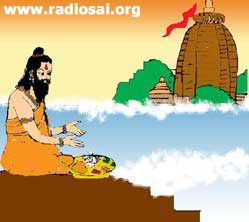
There was in Bengal a devotee named Madhavadasa, who, when his wife died, realised that he had lost his “home,” for his grihalakshmi (goddess of prosperity) had passed away. So he gave all his riches to the poor, donned an ochre robe and wandered alone as a pilgrim to the shrine of Lord Jagannath (another form of Lord Krishna) of Puri in the state of Orissa, India. There he did such deep penance that the Concrete Image soon became the Abstract Reality and the Abstract Reality became a perpetual Vision.
He lost all sense of time and space, of chith (awareness) and achith (non-awareness). Then the Lord, with Mother Subhadra, His Energy Aspect, moved towards him and placed before him the gold plate used by the priests to keep food in front of idol of Lord Jagannatha in the sanctum sanctorum. When Madhavadasa awoke to his gross surroundings, he saw the gold plate with the pile of delicious food upon it. He ate his fill and returned to his inner paradise which he had left for a while.
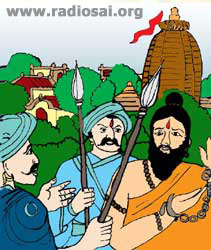
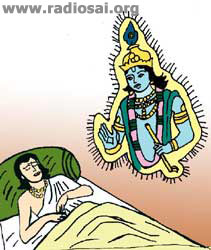
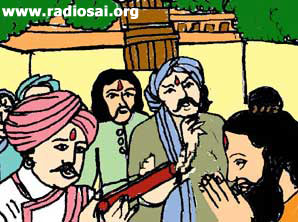
Meanwhile, the plate was reported lost, assumed to be stolen, and discovered by the seashore near Madhavadasa, who was promptly arrested and led to the lockup by some very efficient policemen. He was beaten mercilessly but did not seem to mind it a bit. The chief priest that night had a dream in which Lord Jagannatha asked him not to bring food for the Lord again into the shrine, “You bring food for Me, and when I eat it, you start beating Me!” Then he realised that it was the entire Leela (sport) of the divine to demonstrate the devotion of Madhavadasa and teach others the real nature of Bhakthi (devotion).
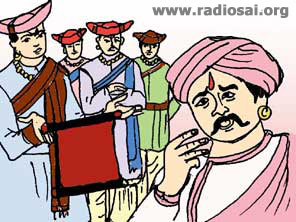
Some scholars and pundits of Puri did not feel happy at this sudden rise to fame of a stranger from Bengal. So they called Madhavadasa into their midst and challenged him to an intellectual duel. Madhavadasa was not a pundit of that type. He had learnt the Sastras only as a staff to help him walk, as a guide to action; not as a stick to beat others with. So he accepted defeat even before the bout began and signed a statement to that effect, which the leading pundit was only too glad to accept because Madhavadasa had a reputation for scholarship which was really frightening. The pundit hurried to Kasi with that token of victory. He waved it before a gathering of scholars and demanded that they should all pay him homage as superior even to Madhavadasa.
But the Lord will not allow His devotee to be humiliated. When the signed statement was opened and read, they were all amazed to find that it was a statement declaring that it was Madhavadasa who had achieved victory and it was the pundit who had signed underneath acknowledging his own defeat! The Lord will not be silent when His Bhaktha (devotee) is insulted or harmed.
- Baba
- Illustrations: Ms Vidya, Kuwait
 Source : http://media.radiosai.org/journals/Vol_05/01AUG07/02-chinnakatha.htm

&&&&&&&&&&&&&&&&&&&&&&&&&&&&&&&&&&&&&&&&&&&&&&&&&&&&&&&&&&&&&&&&&&&&&&&&